

Estate Administration Attorney in Cary
Supporting executors and families through the estate administration process in Cary, North Carolina.
When someone dies in North Carolina, their estate is settled under the supervision of the Clerk of Superior Court. For Cary families, that is the Wake County Clerk in Raleigh. The Doyle Law Offices, P.A. guides executors, administrators, and families through each step of this court-supervised process. Attorney Hank Doyle has practiced law since 1995, and our estate administration services are built on personalized, thorough legal guidance that protects the interests of your loved one's estate and their heirs.
Understanding Estate Administration in NC
Estate administration in North Carolina follows Chapter 28A of the General Statutes, a defined sequence of steps the personal representative must complete before anyone inherits.

Qualification and probate
It starts at the courthouse: the will is probated, and the Clerk appoints the executor named in it. When there is no will, the Clerk appoints an administrator under the priority rules for intestate estates.
Inventory of assets
The personal representative files a sworn inventory of everything the deceased owned, from real estate and vehicles to bank accounts and personal property, within the deadline NC law sets after qualification. Accurate valuation here shapes everything that follows.
Notice to creditors, debts, and taxes
NC requires published notice to creditors, and debts and any final tax filings are settled before anything is distributed. Sometimes that means selling assets to cover obligations.
Distribution and closing
Once debts and taxes are resolved, assets pass to the beneficiaries under the terms of the will, or by intestacy law when there is no will, and the estate is closed with a final accounting to the Clerk.

Who Benefits from an Estate Administration Lawyer?
Executors and administrators carry personal legal responsibility for getting the steps above right. We also regularly help heirs and beneficiaries protect an inheritance, families settling an estate with no will, business owners, owners of property in multiple states, and families with complex dynamics, where a neutral and orderly process protects relationships as well as assets.
Our Cary Estate Administration Services
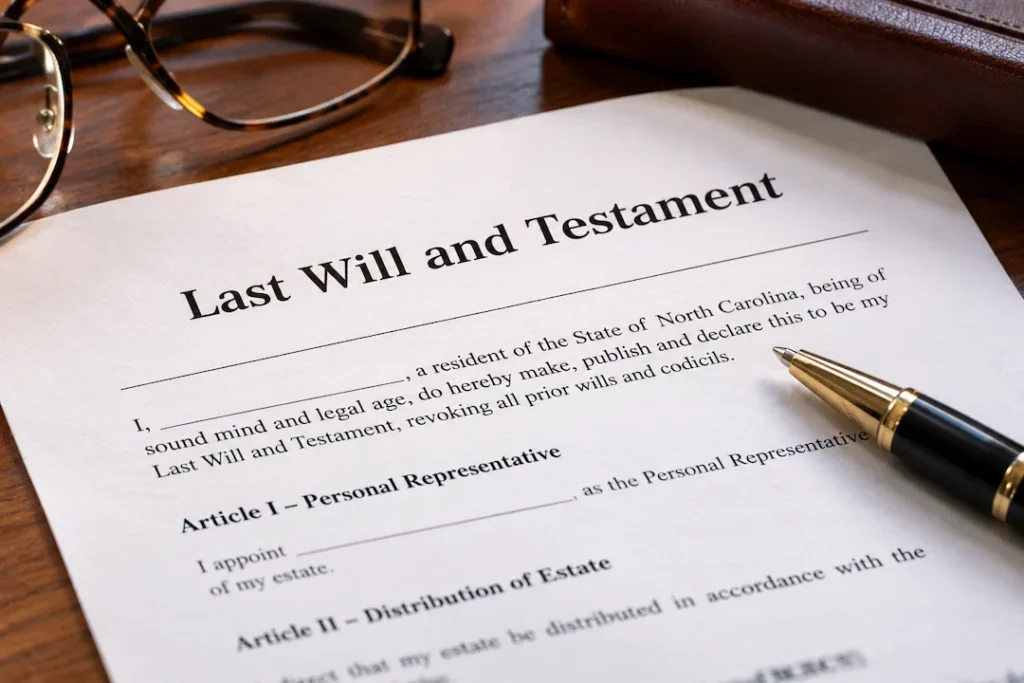
Probate and court filings
From qualification before the Wake County Clerk through the final accounting, we prepare the filings, meet the deadlines, and represent the estate when court involvement is required.
Asset inventory and valuation
We help you compile and value the estate's assets so the inventory is right the first time.
Debt settlement and tax filings
We identify valid creditor claims, handle the required notices, and coordinate final tax filings so the estate closes without surprises.
Distribution of assets
We oversee distribution under the will or intestacy law, so every beneficiary receives what the law and the documents provide.
Dispute resolution
When conflicts arise among beneficiaries or with the executor, we work to resolve them. If a dispute escalates, our civil litigation experience means the estate does not need a second law firm. Contested wills are handled through our inheritance disputes practice.
Trust administration
Where the estate includes a trust, we administer it according to the grantor's terms, including asset management, accounting, and communication with beneficiaries.

Serving Cary, Raleigh, and Wake County
Our Cary office is at 1135 Kildaire Farm Rd, Suite 200. Closer to northern Wake County? Our Wake Forest office handles estate administration too.
FAQs
How long does estate administration usually take?
Most North Carolina estates take several months to a year; complex assets or disputes can extend that. The required creditor notice period alone means no estate closes overnight.
Are there ways to avoid probate?
Yes, but they have to be set up before death. A funded revocable living trust and proper beneficiary designations pass assets outside probate, which is a core part of estate planning. Small estates below a statutory threshold may also qualify for a simplified collection-by-affidavit process.
What happens if the deceased didn't leave a will?
The Clerk appoints an administrator, and the estate passes under North Carolina’s intestacy formulas. The court process still happens; state law simply decides who inherits instead of the deceased.
Can an executor be compensated?
Yes. North Carolina allows the Clerk to approve a commission of up to five percent of the estate’s receipts and expenditures (N.C.G.S. § 28A-23-3), weighed against the time and responsibility involved.
